
Infected Insect Bite in London? How To Treat It Swiftly
Insect bites are a fact of summer life in the UK, and for most people they amount to little more than a frustrating itch that settles within a few days. But when a bite becomes infected, it needs prompt attention. Left untreated, an infected bite can escalate quickly, causing significant discomfort, spreading infection, and in some cases requiring more intensive treatment.
The good news is that you do not need a GP appointment to get help. Through the NHS Pharmacy First scheme, our team at Junction Pharmacy can assess and treat infected insect bites quickly and without the wait.
Find out what to look out for, when to act, and how our Pharmacy First service in Brixton can help. Ready to be seen? Reach out or drop in for support today.
How Do Insect Bites Become Infected?
When an insect bites, it breaks the skin. This creates an entry point for bacteria, most commonly Staphylococcus aureus or Streptococcus species, which live naturally on the skin surface. Scratching the bite, which almost everyone does instinctively, introduces bacteria from under the fingernails into the wound and increases the risk of infection significantly.
Common insects responsible for bites in the UK include:
➤ Mosquitoes
➤ Midges
➤ Horseflies
➤ Fleas
➤ Bedbugs
➤ Ants and wasps (stings rather than bites, but infection risk is similar)
Horsefly bites in particular carry a higher infection risk because of the way they cut into the skin rather than piercing it cleanly. They are also more painful and slower to heal.
Signs That Your Insect Bite Is Infected
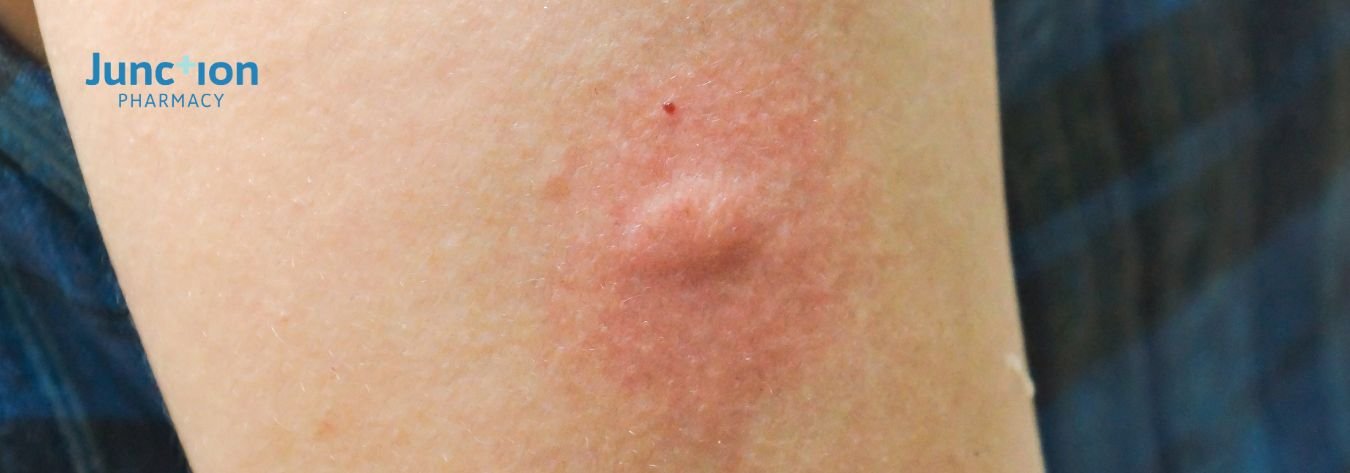
A normal bite response involves redness, swelling, and itching that peaks within 24 to 48 hours and gradually improves. An infected bite behaves differently. Knowing the difference helps you act at the right time.
Signs that an insect bite may be infected include:
➤ Redness that is spreading beyond the original bite site
➤ Increasing warmth or heat around the bite
➤ Swelling that is worsening rather than settling
➤ Pus or discharge from the bite wound
➤ Pain that is intensifying rather than improving
➤ A red streak extending from the bite, which may indicate the infection is spreading through the lymphatic system
➤ Fever, chills, or feeling generally unwell
If you notice a spreading red streak or develop a high fever alongside a bite, seek urgent medical attention immediately. This can indicate a serious systemic infection requiring prompt treatment.
Signs of infection such as increasing redness, swelling, and pus should be assessed by a healthcare professional as soon as possible to prevent the infection from spreading.
What Is Pharmacy First and How Does It Help?
The NHS Pharmacy First scheme allows trained pharmacists to assess and treat a range of common conditions directly, without the need for a GP referral or appointment. Infected insect bites are one of the conditions included within the scheme.
At Junction Pharmacy in Brixton, our Pharmacy First service means you can walk in or book an appointment and be seen by a qualified clinician the same day. If your bite requires antibiotic treatment, our pharmacist can supply this directly under the scheme, saving you the time and inconvenience of a separate GP visit.
This service is available to eligible NHS patients at no cost for the consultation.
How Is an Infected Insect Bite Treated?
| Treatment | When It Is Used | Available Via Pharmacy First? |
|---|---|---|
| Topical antiseptic | Mild localised infection or as a preventative measure | Yes |
| Oral antibiotics | Spreading infection, increasing redness or warmth | Yes, where clinically appropriate |
| Antihistamines | To reduce itching and prevent further scratching | Yes |
| Topical hydrocortisone | Inflammation management where no active infection is present | Yes |
| Referral to GP or urgent care | Severe or rapidly spreading infection, systemic symptoms, or red streaking | Referred promptly where needed |
What You Can Do at Home While You Wait
If you are waiting for your Pharmacy First appointment or managing a mild bite at home, the following steps can help limit the risk of infection worsening:
➤ Clean the bite gently with soap and water, then pat dry
➤ Avoid scratching, even if the urge is intense
➤ Apply a cold compress wrapped in a cloth for 10 minutes to reduce swelling
➤ Keep the area clean and uncovered where possible, or loosely covered with a clean dressing
➤ Take an over-the-counter antihistamine to ease itching and reduce the temptation to scratch
➤ Monitor the bite closely over the following 24 to 48 hours for any signs of spreading infection
➤ Do not attempt to squeeze or drain any swelling yourself

When To Seek Urgent Help Instead
Pharmacy First is appropriate for most infected insect bite presentations, but some situations require more urgent care. Go to A&E or call 999 if you experience:
➤ Difficulty breathing or swallowing following a bite or sting, which may indicate anaphylaxis
➤ Rapid swelling of the face, lips, or throat
➤ A high fever combined with confusion or extreme drowsiness
➤ A rapidly spreading red streak moving from the bite toward the body
These are potential signs of a severe allergic reaction or serious systemic infection and require emergency treatment.
Frequently Asked Questions
Get Seen Today at Junction Pharmacy, Brixton
Do not let an infected insect bite drag on or get worse. At Junction Pharmacy in London, our Pharmacy First service means you can get a clinical assessment and the right treatment on the same day, without needing to see your GP first.
We serve patients across London, including Brixton and Camberwell, with walk-in availability and same-day appointments.
Find out more about our Pharmacy First service or reach out to book your appointment now and get the relief you need today.
You can also reach us directly by calling 02072747599 or emailing junctionpharmacy@gmail.com.
Disclaimer: This article is intended for general guidance and educational purposes only. It does not constitute medical advice. If you are experiencing severe symptoms, signs of anaphylaxis, or a rapidly spreading infection, seek emergency medical care immediately. Always consult a qualified healthcare professional for diagnosis and treatment.
