
Does High Blood Pressure Make You Tired? Signs To Watch For
High blood pressure, also known as hypertension, is often called a silent condition because it may not present obvious symptoms until it reaches more severe levels. However, one question we often hear at Junction Pharmacy is: does high blood pressure make you tired?
In this guide, we explore how high blood pressure can impact your energy levels, its other potential side effects, and why regular blood pressure testing is such a crucial part of looking after your long-term health.
Reach out to Book A Blood Pressure Check
Quick Answer: Yes, high blood pressure can make you feel tired. This happens because your heart has to work harder to pump blood through your arteries, which can reduce the efficiency of oxygen and nutrient delivery around the body over time. Fatigue linked to high blood pressure is often subtle at first, which is why regular monitoring is one of the most reliable ways to catch it early.
How High Blood Pressure Can Lead To Fatigue
High blood pressure can genuinely make you feel tired, though this side effect may not be as widely recognised as some of the other symptoms associated with hypertension. Fatigue often occurs when your heart has to work harder than usual to pump blood through your arteries. This extra effort can result in decreased oxygen and nutrient flow to tissues and organs, leaving you feeling tired and drained, even when you have not done anything particularly demanding.
Over time, unmanaged high blood pressure can lead to a more persistent, chronic sense of fatigue as your body’s systems work harder to maintain normal function under increased strain. This is one of the reasons hypertension is sometimes described as a silent condition, since the fatigue can develop so gradually that it becomes easy to attribute to other causes, such as stress, poor sleep, or simply a busy lifestyle.
Additionally, high blood pressure can cause damage to your arteries over time, making them less elastic and more rigid. This affects circulation and can reduce the efficiency of oxygen and nutrient delivery throughout the body. Feeling tired or sluggish can therefore be a subtle, easily overlooked sign that your blood pressure may be elevated, particularly if this tiredness has crept in gradually rather than appearing suddenly.
Why Fatigue From High Blood Pressure Is Easy To Miss
Because tiredness is such a common, everyday complaint with many possible causes, it can be genuinely difficult to identify high blood pressure as the underlying reason without a proper check. Several factors can make this connection easy to overlook:
➤ Fatigue develops gradually in many cases, rather than appearing as a sudden, obvious change
➤ Tiredness is frequently attributed to stress, poor sleep, or a busy work and family life
➤ High blood pressure itself often causes no other noticeable symptoms in its early stages
➤ Many people do not routinely check their blood pressure unless prompted by a health appointment
➤ Fatigue can fluctuate day to day, making it harder to recognise as a consistent pattern linked to an underlying cause
This is precisely why regular blood pressure checks matter, even when you feel generally well, since hypertension can be quietly present and contributing to symptoms like fatigue long before it becomes obvious.
Other Side Effects Of High Blood Pressure
Fatigue is just one of the possible side effects of hypertension. Being aware of the following symptoms can help you recognise when it may be time to get your blood pressure checked.
➤ Headaches: persistent or unusually severe headaches can be a sign of high blood pressure, particularly if they occur frequently or feel different from your usual pattern
➤ Dizziness: feeling lightheaded or dizzy can happen when blood pressure fluctuates or spikes unexpectedly
➤ Shortness of breath: if your heart is struggling to pump effectively, you may notice you become short of breath during normal, everyday activities
➤ Blurred vision: high blood pressure can cause damage to the blood vessels in your eyes over time, leading to changes in vision
➤ Chest pain: this is a more serious symptom and should be addressed immediately, as it could indicate a significant heart issue
➤ Nosebleeds: while uncommon as an early sign, frequent or unexplained nosebleeds can occasionally be associated with very high blood pressure
It is worth noting that many people with high blood pressure experience no symptoms at all, which is why testing, rather than waiting for symptoms to appear, remains the most reliable way to detect it.
Understanding Blood Pressure Readings At A Glance
| Category | Reading (mmHg) | What It May Mean |
|---|---|---|
| Normal | Below 120/80 | Generally considered a healthy range for most adults |
| Elevated | 140/90 mmHg or 135/85 mmHg when measured at home | Worth monitoring and reviewing lifestyle factors |
| High blood pressure | 140/90 and above | Typically indicates hypertension, may need treatment |
| Severely high (hypertensive crisis) | 180/120 or above | Requires urgent medical attention |
According to NHS figures, high blood pressure affects a significant proportion of adults in the UK, and many people are unaware they have it simply because it so rarely causes obvious symptoms until it becomes more severe.
The Importance Of Regular Blood Pressure Testing
One of the key steps in managing high blood pressure is early detection. Regular blood pressure checks can help you monitor your levels and catch any potential issues before they escalate into something more serious. At Junction Pharmacy, we offer convenient and accurate blood pressure testing services designed to fit easily into your routine. Understanding your blood pressure readings can help you make informed decisions about lifestyle adjustments or the need for further medical intervention.
Testing is particularly important for certain groups, including:
➤ Adults over the age of 40, who are advised to have their blood pressure checked at least every five years as a minimum
➤ People with a family history of high blood pressure or cardiovascular disease
➤ Individuals who are overweight, smoke, or drink alcohol regularly and above recommended limits
➤ Anyone experiencing persistent, unexplained fatigue, headaches or dizziness
➤ Those with existing conditions such as diabetes or kidney disease, which can be closely linked to blood pressure control
How Does Blood Pressure Testing Work?
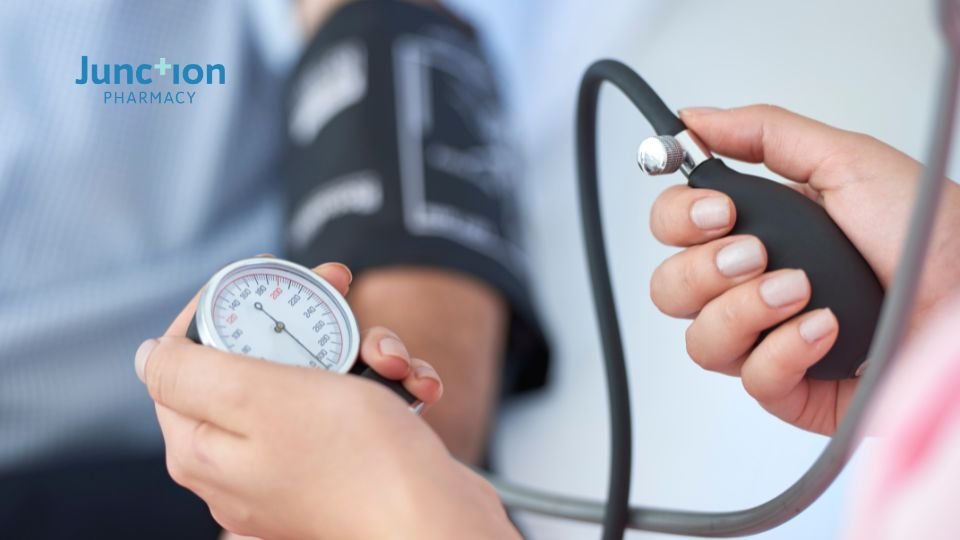
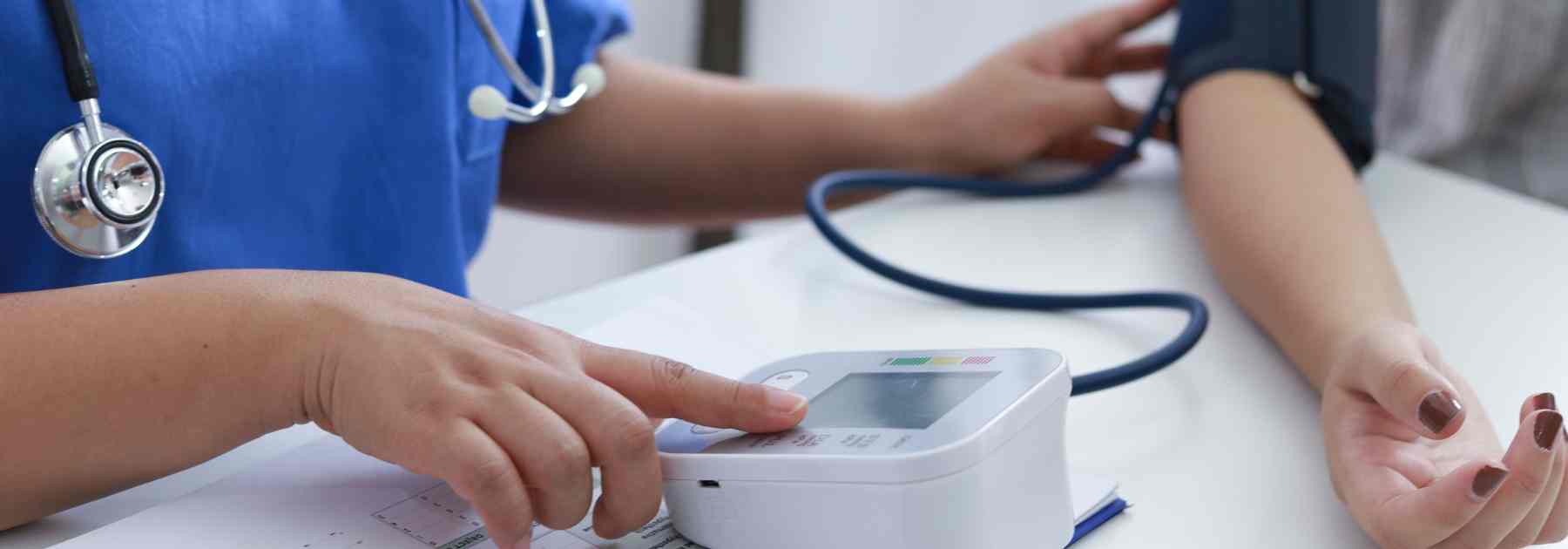
Blood pressure testing is a simple, non-invasive procedure that only takes a few minutes to complete. During the test, an inflatable cuff is wrapped around your arm and inflated to briefly restrict blood flow. As the cuff gradually deflates, measurements are taken to give two readings:
➤ Systolic pressure: the pressure in your arteries when your heart beats and pumps blood around the body
➤ Diastolic pressure: the pressure in your arteries when your heart rests between beats
A reading below 120/80mmHg is generally considered normal for most adults. Readings consistently above 140/90mmHg typically indicate high blood pressure and may warrant lifestyle changes or medical treatment, depending on the individual and any other health factors involved.

What To Do If Your Blood Pressure Is High
If your blood pressure readings indicate hypertension, try not to panic. There are effective, well established strategies to help manage it, often starting with relatively simple changes before medication becomes necessary.
➤ Lifestyle adjustments: eating a balanced diet, reducing salt intake, maintaining a healthy weight, and engaging in regular physical activity can all help lower blood pressure over time
➤ Reducing alcohol and stopping smoking: both can contribute significantly to elevated blood pressure and place additional strain on the cardiovascular system
➤ Managing stress: chronic stress can contribute to blood pressure spikes, so finding sustainable ways to manage stress can play a meaningful supporting role
➤ Medication: in some cases, medication may be necessary to manage high blood pressure effectively, particularly where lifestyle changes alone are not sufficient. Your GP or pharmacist can advise on suitable treatment options
➤ Monitoring regularly: continued monitoring at home or through regular visits to Junction Pharmacy helps ensure your blood pressure remains within a healthy range over time
Lifestyle Habits That Support Healthy Blood Pressure
Alongside any medical treatment, a number of everyday habits can meaningfully support healthy blood pressure levels and, in turn, help reduce associated fatigue.
➤ Reducing salt intake, including hidden salt in processed and takeaway foods
➤ Eating plenty of fruit, vegetables and whole grains as part of a balanced diet
➤ Staying physically active with regular movement, even if this starts with short daily walks
➤ Limiting caffeine and alcohol intake, particularly later in the day
➤ Prioritising consistent, good quality sleep, which supports both blood pressure and overall energy levels
Fatigue Versus Other Causes Of Tiredness
Because tiredness has so many possible explanations, it can help to consider whether your fatigue has any particular pattern that points towards high blood pressure rather than another cause entirely. A few useful questions to reflect on include whether the tiredness has developed gradually over months rather than appearing suddenly, whether it persists even after a full night’s sleep, and whether it is accompanied by any of the other symptoms mentioned earlier, such as headaches or breathlessness during normal activity.
None of these patterns confirm high blood pressure on their own, and fatigue with no other symptoms is just as likely to stem from causes such as poor sleep quality, low iron levels, thyroid issues or simply a demanding period in life. This is exactly why a blood pressure check is such a useful, low effort first step. It can quickly rule high blood pressure in or out, allowing you and your healthcare team to focus on the right next steps for your specific situation, rather than guessing at the cause.
Get To The Heart Of The Matter
While high blood pressure can contribute to fatigue and a range of other symptoms, regular monitoring and proactive management can help prevent these side effects from significantly impacting your quality of life. At Junction Pharmacy, we are here to support your health journey with professional blood pressure testing services and advice tailored to your individual needs.
If you are concerned about feeling tired and suspect high blood pressure may be the cause, get in touch or visit Junction Pharmacy in Brixton for a blood pressure check. Early detection can make a genuine difference in managing your health and preventing more serious complications down the line.
Frequently Asked Questions
Can high blood pressure cause tiredness even without any other symptoms?
Yes, this is entirely possible and is actually one of the more common patterns seen with high blood pressure. Because hypertension is often described as a silent condition, fatigue may be the only noticeable symptom for some people, particularly in the earlier stages before blood pressure reaches more severely elevated levels. This is precisely why relying on symptoms alone is not a reliable way to rule out high blood pressure, and why a simple blood pressure check remains the most accurate way to find out what is actually happening.
How often should I get my blood pressure checked if I have no known health issues?
For most healthy adults with no known risk factors, a blood pressure check every three to five years from around the age of 40 is generally considered reasonable, in line with typical NHS recommendations. However, if you have risk factors such as a family history of hypertension, are overweight, smoke, or have noticed symptoms like persistent fatigue or headaches, more frequent checks are advisable. Many pharmacies, including Junction Pharmacy, offer convenient walk-in or bookable blood pressure testing, making it easy to stay on top of your readings without needing a full GP appointment.
Does high blood pressure affect sleep quality, and could that be the real cause of my fatigue?
There can be a genuine two-way relationship between high blood pressure and sleep. Poor sleep quality, including conditions such as sleep apnoea, can contribute to elevated blood pressure over time, while high blood pressure itself can sometimes disrupt sleep, creating a cycle that worsens fatigue from both directions. If you are experiencing persistent tiredness alongside poor sleep, it is worth discussing both issues with a healthcare professional, as addressing one may help improve the other, and identifying which came first can guide the most appropriate treatment approach.
Can blood pressure medication itself make me feel more tired?
In some cases, yes, certain blood pressure medications can cause fatigue as a side effect, particularly in the early weeks of treatment while your body adjusts to the new medication. This is generally more common with certain classes of blood pressure medication than others, and the effect often lessens over time as your body adapts. If you notice ongoing tiredness after starting a new blood pressure medication, it is worth mentioning this at your next review, as your prescriber may be able to adjust your dose or consider an alternative option if the fatigue is significantly affecting your daily life.
Is it normal for blood pressure to vary throughout the day?
Yes, blood pressure naturally fluctuates throughout the day in response to factors such as physical activity, stress, caffeine intake, and even your posture at the time of measurement. It is generally lowest during sleep and tends to rise gradually in the morning. For this reason, a single high reading does not automatically mean you have hypertension, and healthcare professionals typically look at multiple readings taken over time, sometimes including home monitoring, before making a diagnosis. If you are concerned about a single unusually high reading, it is worth having it rechecked rather than assuming the worst immediately.
Can losing weight help improve both my blood pressure and my energy levels?
Yes, for many people, losing excess weight can have a meaningful positive effect on blood pressure, since carrying excess weight places additional strain on the heart and cardiovascular system. As blood pressure improves, many people also notice an improvement in their overall energy levels, partly because the heart no longer has to work as hard to circulate blood around the body. Weight loss is just one part of the picture alongside diet, activity and, where appropriate, medication, but it can be a genuinely valuable step for those who are carrying excess weight and managing elevated blood pressure.
When should I seek urgent medical attention for high blood pressure symptoms?
While fatigue and mild symptoms can usually be addressed through a routine check and follow-up care, certain symptoms warrant urgent attention. These include sudden, severe headaches, chest pain, difficulty breathing, sudden vision changes, confusion, or a blood pressure reading of 180/120mmHg or higher, particularly if accompanied by any of these symptoms. If you experience any of these signs, it is important to seek emergency medical help immediately rather than waiting for a routine appointment, as this combination can indicate a hypertensive emergency requiring prompt treatment.
Concerned About Your Blood Pressure?
Our Brixton based team offers quick, convenient blood pressure testing and honest advice on next steps. Get in touch to book your check.
Call 02072747599 or email junctionpharmacy@gmail.com
Disclaimer: This article is intended for general guidance and educational purposes only. It does not constitute medical advice and should not replace personalised guidance from a qualified healthcare professional. If you are experiencing persistent fatigue, symptoms of high blood pressure, or have concerns about your cardiovascular health, always speak to your pharmacist or GP for a proper assessment.
